

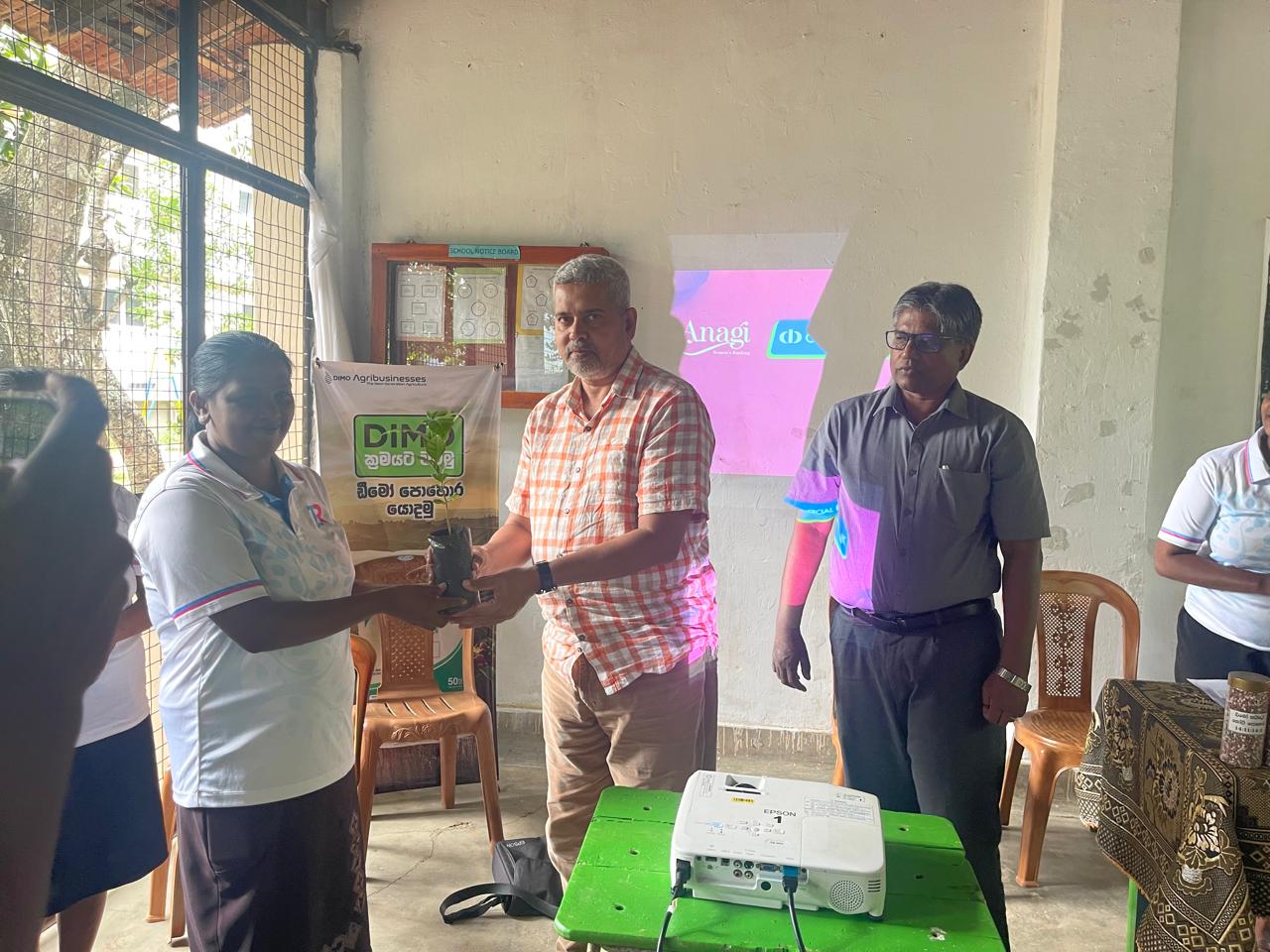
The GCF Knuckles Project organized a special meeting for the Janarukula Women’s Society at Aruppola, Kandy, with the objective of exploring ways in which the Project Management Unit (PMU) could support the society in empowering its members and enhancing their livelihoods.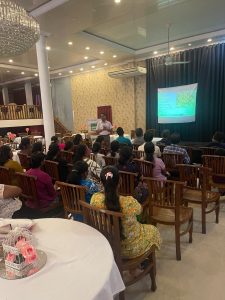
During the discussion, the Janarukula members proposed that distributing coffee plants to selected women with access to suitable land and a strong interest in cultivation would be a practical and sustainable initiative. Following this, Janarukula submitted a list of 84 women who collectively requested 868 coffee plants.
The PMU subsequently reached out to Commercial Bank, which generously agreed not only to fund the cost of the 868 coffee plants but also to sponsor two training sessions on coffee cultivation. These sessions were scheduled to be held in Aruppola and Dambawela on 27 July 2025.
At the Aruppola session, Dr. Ananda Subasinghe, Project Manager of the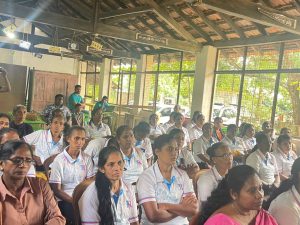 GCF Knuckles Project, delivered an in-depth presentation covering the entire coffee cultivation process. He highlighted the potential of Lak Parakum—a local Arabica variety developed and promoted by the Department of Export Agriculture (DEA)—which is now recognized among the world’s top ten Arabica coffees. Dr. Subasinghe noted that, with dedication, Janarukula members could eventually connect with Kiyota Coffee Company and receive premium prices for their harvest.
Mr. Rohitha Sumanaweera, Chairman of Kiyota off
Cee, also addressed the gathering. He reflected on the rich legacy of Sri Lankan coffee, explaining that although the Arabica coffee industry in Sri Lanka declined in the 1880s due to a natural outbreak, the passion for coffee endured across generations. He shared how Mr. Kazuyuki Kiyota, a veteran from the Japan Fair Trade Committee (JFTC), was inspired by this legacy and helped revive Ceylon Coffee with the support of the Sri Lankan coffee community, the Government of Sri Lanka, Japanese consumers, and the Japan International Cooperation Agency (JICA). Today, Kiyota Coffee stands as a symbol of community-driven, environmentally conscious coffee production.
Mr. Sumanaweera also emphasized that, with proper training in coffee processing, Janarukula members could potentially earn as much as Rs. 16,000 per kilogram in the future.
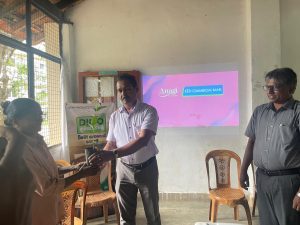 In conclusion, Mr. Upali Sumithra, President of Janarukula, expressed heartfelt gratitude to the GCF Knuckles Project and Commercial Bank for initiating and supporting this promising livelihood development activity.